
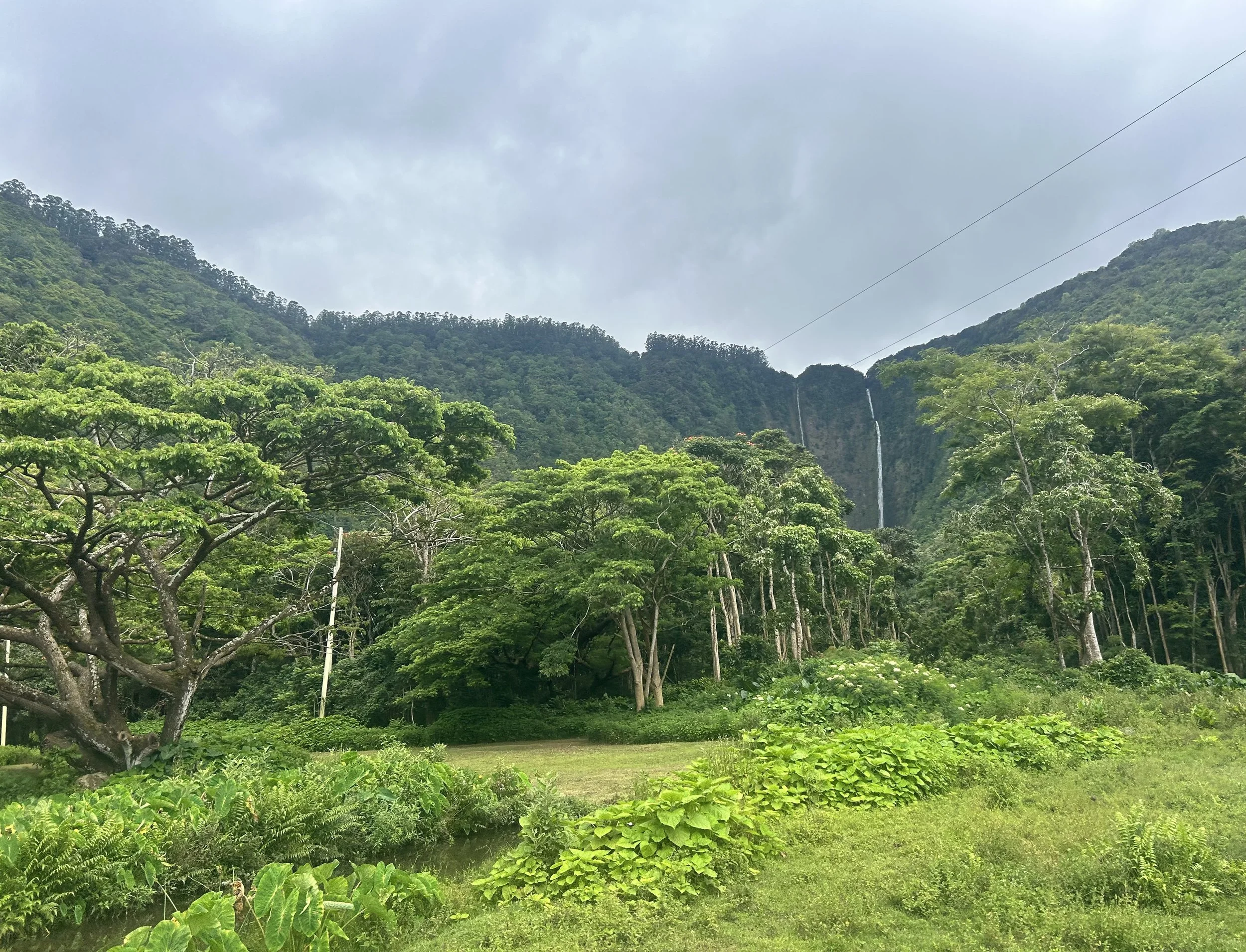
An Abbreviated History on Rainwater Harvesting
Ola i ka wai: Water is life.
Rainwater harvesting is one of humanity’s oldest water-management practices. For thousands of years, communities throughout Africa, Asia, Europe, the Middle East, the Pacific, and the Americas have collected rainfall from rooftops, courtyards, and natural surfaces for drinking, agriculture, livestock, and daily household use.
Ancient civilizations constructed cisterns, reservoirs, and underground storage systems to capture water during wet seasons and preserve it through periods of drought. Fresh water has been the lifeblood of Hawaiʻi’s people since time in immemorial through management practices that managed the collection, flow and distribution of water. As centralized water systems expanded, rainwater harvesting became less common in many developed areas but remained essential in rural, remote, and island communities.
Rainwater catchment has long supported households beyond the reach of municipal water systems, particularly on Hawaiʻi Island. Today, growing concerns about water security, drought, climate resilience, infrastructure costs, and personal responsibility have renewed interest in rainwater harvesting.
Modern systems combine this long-standing practice with improved roofing materials, storage tanks, filtration, disinfection, water testing, and professional standards. Rainwater harvesting is no longer simply an alternative water source. It is an important part of a resilient and sustainable water future.
Capturing rainwater is a technique that goes back thousands of years in many different areas of the world. In Hawai’i, rainwater harvesting evolved from ancient Indigenous watershed management system(ahupua'a ) where water was stewarded and moved across land divisions ran from the rain in the mountains (mauka) towards the sea (makai).
There’s a renewed interest in rainwater harvesting both born out of necessity and desire.
Reduces and replaces reliance on municipally treated water and well water.
Helps modulate and regulate the impacts from climate change.
Rainwater harvesting for domestic use on Hawai’i Island is widespread. Communities without access to municipal water often catch and store falling rain from rooftops, which is then stored in catchment systems, rain barrels, or other types of tanks for domestic, agricultural or commercial use. Properly designed, maintained and treated systems can provide great source of water.
Survey of Rainwater Catchment Use and Practices on Hawaii Island: This 2017 document, published in the Journal of Contemporary Water Research & Education, details water usage, challenges, and practices on Hawaii Island. Access the source at https://opensiuc.lib.siu.edu/cgi/viewcontent.cgi?article=1854&context=jcwre. From Mauka to Makai: The ahupua'a of Hawai'i. Library of Congress. Blogs. Access this source at https://blogs.loc.gov/maps/2024/03/from-mauka-to-makai-the-ahupuaa-of-hawaii/.
Flowing Issues A Brief History of Rainwater Harvesting. Access this 2009 source at https://wcponline.com/2009/09/14/flowing-issues-brief-history-rainwater-harvesting/,
Waiwai: Water and the future of Hawaiʻi. University of Hawaiʻi Press.