
Join Us in Building Hawaiʻi’s Rainwater Harvesting Future Together
Hawaiʻi Institute of Rainwater is building a central knowledge hub for rainwater harvesting connecting trusted information, practical guidance, research, education, and resources for communities across Hawaiʻi.
Explore resources for:
Homeowners | Professionals | Educators | Researchers | Government & Policy Leaders | Emergency & Volcanic Conditions
Together, we can strengthen knowledge, preparedness, responsible stewardship, and the future of Hawaiʻi’s rainwater harvesting communities.
Join Us Today!
Community outreach drives meaningful change. The time to act is now.
Educators, nonprofit leaders, industry partners, government stakeholders, and community members all have a role in advancing safe, responsible Rainwater Harvesting across Hawaiʻi.
Collaborate with us to strengthen public education, develop practical guidance, support informed leadership, and establish clear accountability and responsibility for the future of Rainwater Harvesting communities throughout Hawai’i.
Rainwater Harvesting Resources
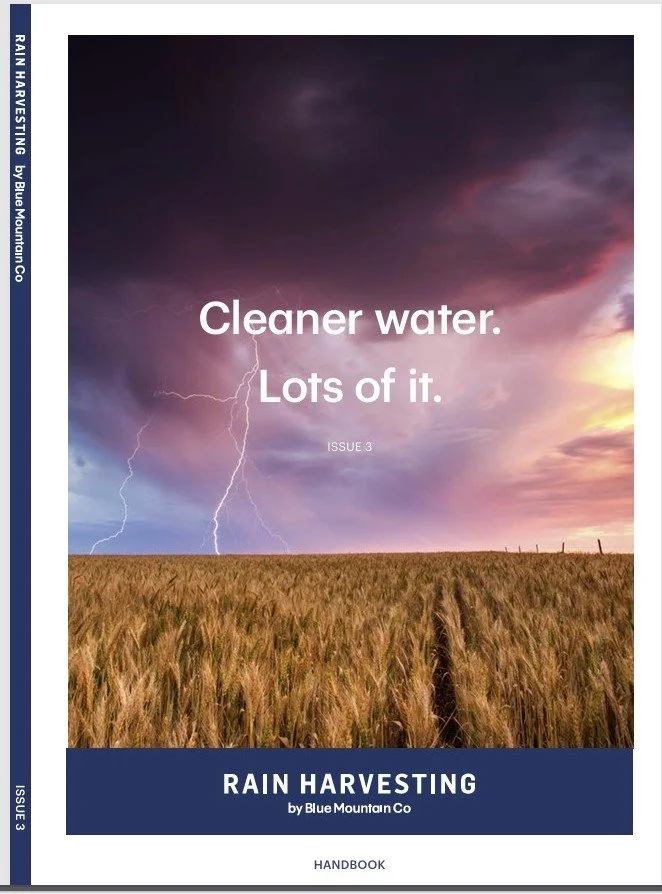
Blue Mountain Co’s Rainwater Harvesting Handbook, Clean Water. Lots of it. (Issue 3; 2023):
Blue Mountain Co.’s Rainwater Harvesting Handbook: Clean Water. Lots of It. (Issue 3, 2023) is a practical guide to designing and maintaining an effective rainwater harvesting system. It explains how system components—including gutters, debris screens, first-flush diverters, tanks, pumps, filtration, and treatment—work together to protect water quality, maximize collection, and provide a dependable rainwater supply.
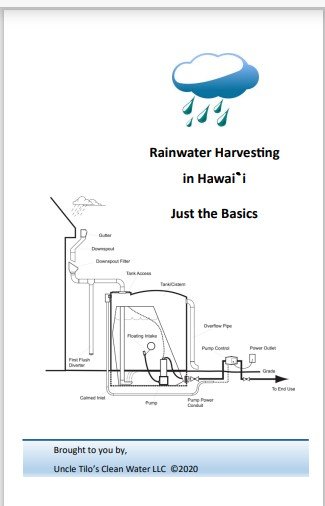
The booklet’s full title is Rainwater Harvesting in Hawaiʻi: Just the Basics, produced by Uncle Tilo’s Clean Water LLC in 2020. It is a 16-page educational workbook designed to walk homeowners through the fundamentals of managing a household Rainwater Harvesting system.
The booklet combines field experience, technical standards, homeowner checklists, local Hawaiʻi conditions, humor, and hands-on instruction. It also references ARCSA/ASPE/ANSI Standard 63, CTAHR guidance, the ARCSA Rainwater Harvesting Manual, Australian drinking-water guidance, and EPA disinfection guidance.
College of Tropical Agriculture and Human Resources
Guidelines on Rainwater Catchment Systems for Hawai’i (2020)
The University of Hawaiʻi College of Tropical Agriculture and Human Resources’ Guidelines on Rainwater Catchment Systems for Hawaiʻi (2020) is a practical reference for designing, operating, and maintaining household rainwater systems under Hawaiʻi’s unique environmental conditions. It addresses the entire system—from rooftop collection and storage to filtration, disinfection, water testing, maintenance, and fire-protection considerations—with an emphasis on protecting water quality from the raindrop to the faucet.
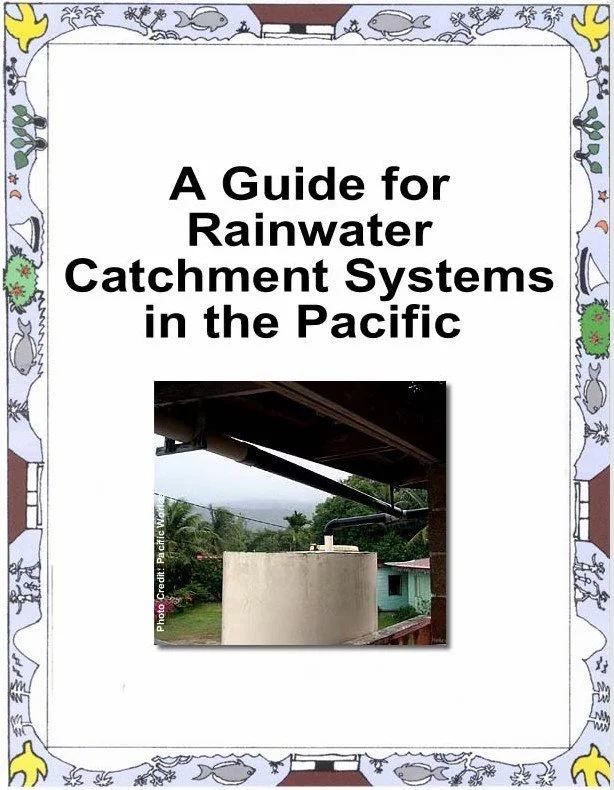
A Guide for Rainwater Catchment Systems in the Pacific
The University of Hawaiʻi College of Tropical Agriculture and Human Resources’ A Guide for Rainwater Catchment Systems in the Pacific is a practical, illustrated resource designed to help households safely collect, store, maintain, test, and treat rainwater. It covers system components, contamination prevention, water quality, filtration, disinfection, and routine maintenance, emphasizing that safe catchment water depends on proper system design and responsible household management.